Personal Finance · Auto Coverage
The Quiet Reason Two Similar Drivers Can See Very Different Auto Insurance Quotes
A consumer look at how location, driving history, vehicle details, and insurer underwriting shape the numbers on a renewal notice — and why some drivers now compare options before they sign another year.
I did not set out to write about insurance. I set out to understand a bill.
Last winter a neighbor and I compared renewal letters at the end of a school drop-off. Same town. Similar commutes. Cars that were not exotic or new. The premiums were not close. That gap — unremarkable to anyone who has shopped coverage more than once — is what sent me looking at how auto insurance is actually priced in the United States.
It is easy to treat a renewal as weather: something that arrives, something you pay. In practice, a premium is a stack of variables. ZIP code and territory, annual mileage, the vehicle’s safety and repair profile, coverage limits, deductibles, credit-based insurance scores where permitted, and the simple fact that carriers weigh those inputs differently. Two households can look alike from the driveway and still land in different rating tiers.
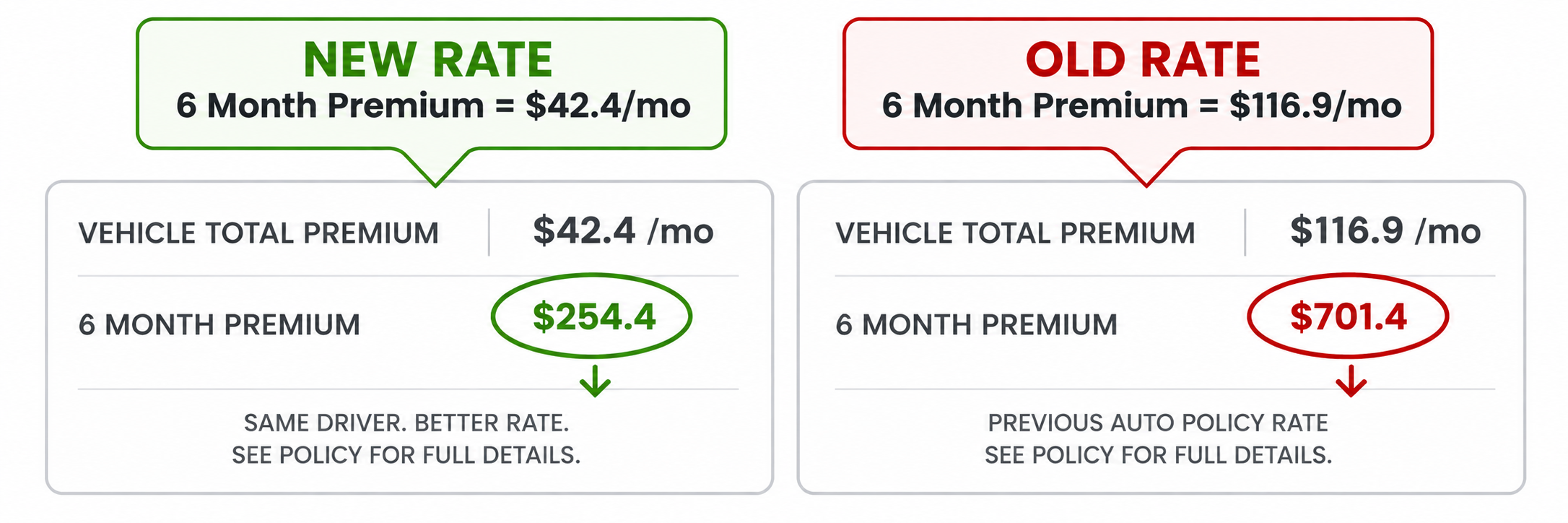
None of that means a lower price is waiting for every driver. It does mean the number on last year’s policy is not a law of nature. Rates and availability may vary depending on your driving record, location, vehicle, credit, and other factors. Some people who compare quotes keep their current carrier. Others find an alternative that fits their budget and coverage needs more closely. The outcome depends on the person, the car, and the market that day.
“Comparing multiple insurers can help drivers understand the options available in their area. It does not promise a particular result.” — Editorial note, Better Auto Policy
What has changed in the last few years is less the math than the access. Tools that collect quotes from more than one company have become ordinary household software — closer to a rate-check than a sales pitch, at least when they are used that way. You still have to read the coverage. You still have to confirm the carrier is licensed in your state. You still should talk with a licensed agent if the details are unclear.
This article looks at one of those comparison tools, Auto Coverage Journal, in the same spirit I would look at a calculator: useful if it is transparent, incomplete if you treat it as a verdict. Actual insurance rates are not guaranteed and will vary. Individual results and premiums depend on many factors including age, driving history, coverage selected, and insurer underwriting.
I used a version of the flow myself with a sample household profile — not as a promise of what any reader will see, but to understand the steps. You enter a location, some vehicle and driver details, and the tool returns quotes that participating carriers are willing to show for that snapshot. If nothing competitive appears, that is information too. A comparison that confirms your current policy is reasonably priced is still a comparison that did its job.